
Quick Answer
Lotus flower yoga is the use of the lotus as both a symbol and a practice in yoga. The flower stands for purity and growth because it rises clean from muddy water. In practice it means Lotus Pose (Padmasana), lotus mudra and lotus-based chakra meditation.
Key Takeaways
- Lotus flower yoga is not a separate style of yoga. It is a theme that runs through yoga: the lotus as a symbol, a seated posture, a hand gesture and a meditation image. The Sanskrit word for lotus is padma, which is why Lotus Pose is called Padmasana and lotus mudra is called Padma Mudra.
- In yoga, the lotus flower symbolises purity, resilience and spiritual awakening. The plant roots in mud, grows through murky water and opens clean above the surface.
- The lotus flower yoga pose is Padmasana, a seated posture in which each foot rests on the opposite thigh with the soles turned up. The crossed legs resemble lotus petals. It is a meditation seat first and a stretch second.
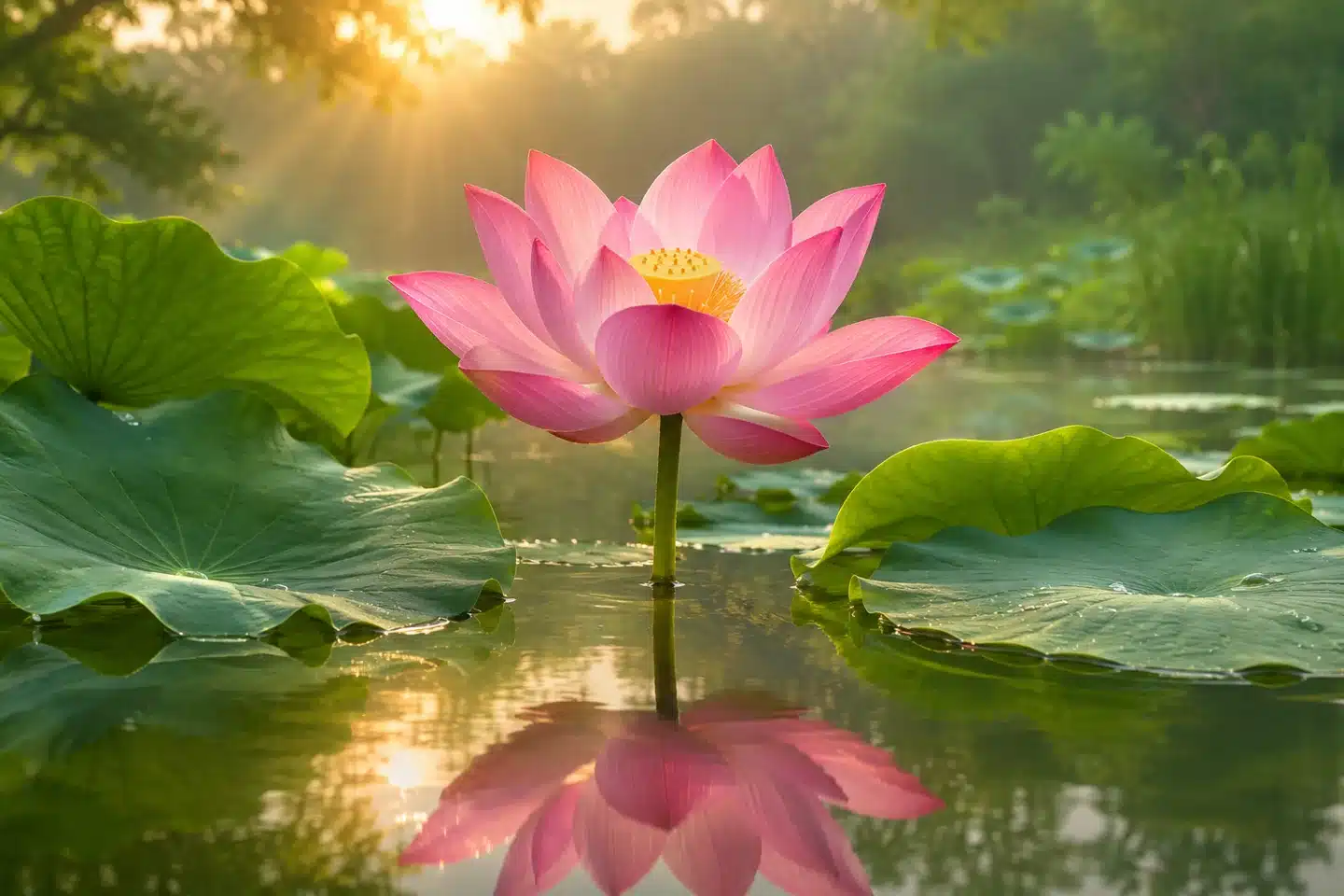
It’s 9 p.m. in Manchester, or lunchtime in Denver. You open a meditation app and there it is again: a pink flower floating on still water. The same flower is printed on your yoga mat and painted on the studio wall. Ever wondered why?
That flower is where lotus flower yoga begins. The term covers three things: what the lotus means in yoga, the cross-legged seat named after it, and the hand gestures and meditations that copy its shape. You don’t need flexible hips to start. You need ten minutes, a cushion and some patience.
Plenty of people are on the same path. In 2022, 16.9% of US adults had practised yoga in the past 12 months, and 57.4% of those practised meditation as part of yoga, according to the CDC National Center for Health Statistics (Data Brief No. 501, June 2024). In England, Sport England’s Active Lives report for November 2023 to November 2024 pointed to strong growth in activities such as yoga and Pilates (Sport England, April 2025). cdcsportengland
This guide explains the symbol, teaches Lotus Pose (Padmasana) safely, sets out what research does and doesn’t support, and ends with a 10-minute routine.
New to these terms? Browse Inteyoga’s yoga teacher training courses in Goa to see how posture, breath and meditation are taught together.
What Is Lotus Flower Yoga?
Lotus flower yoga is not a separate style of yoga. It is a theme that runs through yoga: the lotus as a symbol, a seated posture, a hand gesture and a meditation image. The Sanskrit word for lotus is padma, which is why Lotus Pose is called Padmasana and lotus mudra is called Padma Mudra.
| What people mean | Sanskrit name | What it is |
|---|---|---|
| The symbol | Padma | The sacred lotus as an emblem of purity, growth and awakening |
| The pose | Padmasana | A cross-legged seat with each foot on the opposite thigh |
| The hand gesture | Padma Mudra | Both hands opened like a bloom at the heart |
| The meditation image | Chakra padma | Energy centres pictured as lotuses with set petal counts |
“Lotus Flower Yoga” is also the trading name of several unrelated yoga studios. This article is about the practice, not any single studio.
Lotus Flower Yoga at a Glance
Symbolism and Meaning in Yoga
- Rising from the Mud: The lotus roots in mud and blooms clean above the water. In yoga it stands for growth through difficulty.
- Chakras and Energy: In yoga tradition, each of the seven chakras is pictured as a lotus with a set number of petals.
- Lotus Mudra: In Padma Mudra the hands open like a flower at the heart.
- Purity and Non-Attachment: Water rolls off a lotus leaf. The Bhagavad Gita uses this image for acting without being stained by the world.
- Spiritual Awakening: A closed bud represents potential. An open bloom represents a clear, steady mind.
- The Divine Seat: Lakshmi, Brahma and the Buddha are shown seated or standing on a lotus.
- Colours of the Lotus: Different traditions attach different meanings to white, pink, red and blue lotuses.
Lotus Postures (Asanas)
- Lotus Pose (Padmasana): The classic cross-legged meditation seat.
- Blossoming Lotus Pose (Vikasita Kamalasana): A seated balance with knees wide, feet lifted and arms threaded under the shins.
- Half Lotus Pose (Ardha Padmasana): One foot on the opposite thigh; the usual stepping stone.
- Bound Lotus Pose (Baddha Padmasana): From full Lotus, the arms cross behind the back to hold the feet.
- Scale Pose (Tolasana): From full Lotus, the hands press down and lift the body.
Studios and Practices
- Studios named after the lotus: Many studios use the flower in their name, such as Lotus Flower Yoga in Ohio and Lotus House of Yoga in Nebraska. They are independent businesses with no connection to Inteyoga.
- Lotus-themed classes: Teachers often build a “lotus flow” around hip-opening poses.
- Lotus meditation: A seated practice using lotus mudra or the image of a lotus opening at the heart.
- Chakra practice: Traditional study of the chakras as lotuses.
What Does the Lotus Flower Symbolise in Yoga?
In yoga, the lotus flower symbolises purity, resilience and spiritual awakening. The plant roots in mud, grows through murky water and opens clean above the surface.
The plant behind the symbol is the sacred lotus, Nelumbo nucifera, native to Asia. It resembles a water lily but is a different plant. Its leaves and flowers stand on stalks above the water, and its leaves shed water easily.
Three ideas come from that:
- Purity without escape. The lotus lives in mud yet stays unstained. The Bhagavad Gita (chapter 5, verse 10) compares a person who acts without attachment to a lotus leaf untouched by water.
- Growth through difficulty. The mud feeds the flower. The phrase “no mud, no lotus”, associated with the Zen teacher Thich Nhat Hanh, makes the same point.
- Awakening in stages. A bud stands for potential; an open bloom for clarity.
What Is the Lotus Flower Spiritual Meaning in Yoga for Daily Life?
The lotus flower spiritual meaning in yoga is simple: the mud is daily stress, and the flower is the calm that practice points towards. The lotus does not leave the pond to bloom.
- The mud is pressure, worry and a restless mind.
- The stem is regular practice: posture, slow breathing and attention.
- The flower is a steadier, clearer state.
Yoga does not promise a life without difficulty. It offers a way to meet it.
Where Does Lotus Flower Symbolism in Yoga Come From?
Lotus symbolism in yoga comes mainly from Hindu and Buddhist traditions of the Indian subcontinent.
- In Hindu imagery, the goddess Lakshmi stands or sits on a lotus, and Vishnu holds one.
- One Hindu creation account describes Brahma emerging from a lotus growing from Vishnu’s navel.
- In Buddhist art, the Buddha is often shown on a lotus throne.
- The Buddhist mantra Om mani padme hum is often explained as “the jewel in the lotus”, although scholars interpret it in more than one way.
What Do the Lotus Flower Colours Mean in Yoga?
Lotus colours carry traditional meanings that differ between traditions, so treat this table as a general guide.
| Lotus colour | Common traditional association |
|---|---|
| White | Purity of mind |
| Pink | The classic sacred lotus of religious art |
| Red | Love and compassion |
| Blue | Wisdom and knowledge |
What Is the Lotus Flower Yoga Pose (Padmasana)?
The lotus flower yoga pose is Padmasana, a seated posture in which each foot rests on the opposite thigh with the soles turned up. The crossed legs resemble lotus petals. It is a meditation seat first and a stretch second.
The Hatha Yoga Pradipika, a Sanskrit manual attributed to Svatmarama and generally dated to around the 15th century, lists Padmasana among four principal asanas (chapter 1). The text also calls it a destroyer of disease. That is a traditional statement, not a medical finding.
| Pose fact | Detail |
|---|---|
| Sanskrit name | Padmasana (padma = lotus, asana = seat) |
| English names | Lotus Pose, lotus position |
| Pose type | Seated meditation posture |
| Level | Intermediate to advanced |
| Main joints | Hips (outward rotation), knees, ankles |
| Easier alternatives | Half Lotus, Easy Pose (Sukhasana), a chair |
How Do You Do Lotus Pose Step by Step?
Enter Lotus Pose slowly from Staff Pose, rotate the leg from the hip, and never pull on the knee. If you feel knee pain, stop.
- Sit tall in Staff Pose (Dandasana). Sit on a folded blanket if your lower back rounds.
- Cradle the right shin. Bend the knee, hold the shin in both arms and rock it gently to feel the hip move.
- Place the right foot. Rest it high in the left hip crease, sole up.
- Bring in the left leg. Lift the left shin over the right and place the foot in the right hip crease.
- Let the knees settle. Do not press them down.
- Lengthen the spine. Relax the shoulders. Rest the hands on the knees.
- Breathe. Take 5 to 10 slow breaths through the nose.
- Release with care. Lift the top foot out with your hands, straighten the legs, then repeat with the other leg on top.
Key takeaway: the rotation happens at the hip. The knee only bends.
What Are the Lotus Pose Modifications for Beginners?
Most people cannot sit in full Lotus at first. Beginners should use Half Lotus, Easy Pose and props. These make lotus position yoga for beginners more comfortable.
- Half Lotus (Ardha Padmasana). One foot on the opposite thigh, the other on the floor. Swap sides.
- A cushion or folded blanket. Raising the hips helps the spine stay upright.
- A block under the raised knee. Support stops the knee hanging.
- Easy Pose on tight days. A simple cross-legged seat is a complete meditation posture.
- A chair. Feet flat, spine tall.
- Short holds. Start with 30 to 60 seconds.
What Precautions Should You Take in Lotus Pose?
Safety tip: do not practise Lotus Pose with a knee, ankle or hip injury, and never push through joint pain. Warm up first, enter slowly and come out if you feel pain, numbness or tingling.
Which Poses Prepare You for the Lotus Position?
Hip-opening poses prepare you for the lotus position. Practise them for several weeks before trying the full pose.
| Preparatory pose | Sanskrit name | What it prepares | Suggested hold |
|---|---|---|---|
| Bound Angle Pose | Baddha Konasana | Inner thighs, outward hip rotation | 1 to 2 minutes |
| Head-to-Knee Pose | Janu Sirsasana | One hip at a time | 1 minute each side |
| Eye of the Needle | Sucirandhrasana | Outer hips, back supported | 1 minute each side |
| Fire Log Pose | Agnistambhasana | Deeper outer hip opening | 1 minute each side |
| Half Lotus | Ardha Padmasana | The final shape, one leg at a time | 1 minute each side |
See also our guides to the best flexibility exercises and the best yoga stretches.
What Are the Variations of the Lotus Flower Yoga Pose?
The main variations change either the difficulty or the purpose of the seat.
Which Lotus-Inspired Yoga Poses Can You Practise as a Group?
Six lotus flower yoga poses form a natural family, from gentle to advanced. With the preparations above, they also serve as yoga poses for hip opening.
| Lotus-inspired pose | Sanskrit name | Main purpose | Level |
|---|---|---|---|
| Blossoming Lotus | Vikasita Kamalasana | Balance | Beginner |
| Half Lotus | Ardha Padmasana | Preparation for the full seat | Beginner to intermediate |
| Lotus Pose | Padmasana | Meditation and grounding | Intermediate |
| Scale Pose / Elevated Lotus | Tolasana (Utthita Padmasana) | Core and arm strength | Advanced |
| Fish Pose with Lotus Legs | Matsyasana in Padmasana | Chest opening | Advanced |
| Bound Lotus Pose | Baddha Padmasana | Deep shoulder and chest stretch | Advanced |
Practise the advanced poses only when full Lotus is comfortable, preferably with a teacher.
What Are the Most Common Lotus Pose Mistakes?
The most common mistake is forcing the foot into place by twisting the knee.
| Mistake | Why it matters | Fix |
|---|---|---|
| Pulling the foot up with force | The twist lands on the knee | Rotate from the hip; stop at Half Lotus |
| Skipping the warm-up | Cold hips rotate less | Five minutes of hip openers first |
| Rounding the lower back | The chest collapses | Sit on a blanket or cushion |
| Always crossing the same leg first | Hips develop unevenly | Alternate the top leg |
| Sitting through pain or numbness | Pain is a warning | Come out and rest |
If you are learning the basics, start with what yoga poses are and 20 beginner asanas.
What Are the Benefits of Lotus Flower Yoga?
The practical benefits of lotus flower yoga are a stable seat for meditation, gradual hip mobility, an upright posture and a clear point of focus. The research evidence relates to yoga in general, not to Lotus Pose on its own.
- A steady base for meditation. Crossed legs form a wide base, so the body stays still with less effort.
- An upright spine. When the hips allow it, the spine stacks naturally.
- Hip mobility over time. The preparatory poses train outward rotation of the hips.
- Support for general wellbeing. Research suggests yoga may help improve general wellness by relieving stress and improving mental and emotional health, sleep and balance, according to the US National Center for Complementary and Integrative Health (NCCIH). nih
- A simple focus. Picturing a lotus opening gives a wandering mind one image to return to.
For the calming side of practice, read our guide to yoga for stress relief.
What Are the Mental and Physical Padmasana Benefits?
Padmasana benefits are best described as possible effects of a steady seated practice, not guaranteed outcomes.
Mental
- Calm. Many people find that sitting still with slow breathing feels settling.
- Anxious feelings. The NCCIH reports that yoga may help with anxiety symptoms, but there is little evidence of benefit for people with diagnosed anxiety disorders. nih
- Focus. A steady body makes it easier to keep attention on the breath.
Physical
- Hips. The pose and its preparations work outward hip rotation.
- Ankles and knees. The folded position stretches the tissues around both joints when the hips are open enough.
- Posture. The seat encourages a tall spine and works the muscles that hold it upright.
What Does the Evidence Not Show?
We found no good clinical evidence that Lotus Pose itself cures disease, improves digestion, controls blood pressure or eases childbirth. These claims are common online. They come from traditional texts and should be read as tradition, not medical advice.
Who Is Lotus Flower Yoga For? Five Everyday Examples
Lotus flower yoga can suit anyone who wants a quieter mind and freer hips, whether or not they ever sit in full Lotus.
| Who | The situation | What to practise | Time |
|---|---|---|---|
| Desk worker in London or Chicago | Stiff hips after a day in a chair | Bound Angle Pose, Eye of the Needle | 5 minutes |
| Runner or cyclist | Tight outer hips after training | Head-to-Knee Pose, Fire Log Pose | 5 minutes |
| Busy parent | A racing mind at bedtime | Lotus mudra and lotus visualisation | 2 to 3 minutes |
| New meditator | Can’t sit comfortably | Easy Pose on a cushion | 5 minutes |
| Yoga teacher | Needs a class theme | “No mud, no lotus”: hip openers, Half Lotus, Padma Mudra | One class |
Is Lotus Flower Yoga Safe for Beginners?
The symbolism, lotus mudra and lotus meditations suit almost everyone. Full Lotus Pose is not a beginner posture.
- The NCCIH advises people new to yoga to avoid extreme practices such as headstands, shoulder stands, the lotus position and forceful breathing, and notes that the knee and lower leg are the most commonly injured areas. nih
- In an online practitioner survey reported by Yoganatomy in November 2017, 42% of those who reported a knee injury in yoga said it happened in a pose that included Half Lotus or Lotus. This was a self-selected survey, not a clinical study (Yoganatomy). yoganatomy
The reason is mechanical. The knee is mainly a hinge. In Lotus, the turning has to come from the hip. If the hip is tight, the twist passes to the knee.
Who Should Avoid Lotus Pose?
Avoid Lotus Pose, or practise only with a qualified teacher and your clinician’s agreement, if you have:
- A current or past knee, ankle or hip injury
- Meniscus or ligament problems
- Recent surgery on the legs, hips or lower back
- Sciatica or acute lower-back pain
- Arthritis in the knees or hips
- Numbness or circulation problems in the legs
If you are pregnant, speak to your midwife or doctor before sitting in deep cross-legged positions.
How Do You Know If You Are Ready for Lotus Pose?
A reasonable test is whether Half Lotus is pain-free on both sides for one minute.
| Check | Ready | Not yet |
|---|---|---|
| Easy Pose for 5 minutes | Knees at or below hip height; back upright | Knees higher than hips; back rounds |
| Bound Angle Pose | Knees drop easily | Pinching in the groin or inner knee |
| Cradle the shin | Shin comes level with the chest | Knee or outer hip pulls sharply |
| Half Lotus, 1 minute each side | Top knee rests down; no pain | Top knee floats; any joint pain |
If any row reads “not yet”, stay with Half Lotus or Easy Pose.
Lotus Flower Yoga Pose vs Half Lotus vs Easy Pose: Which Seat Should You Choose?
Choose the seat you can hold without pain. For most beginners that is Easy Pose. Half Lotus is the bridge, and full Lotus is optional.
| Feature | Full Lotus | Half Lotus | Easy Pose |
|---|---|---|---|
| Leg position | Both feet on opposite thighs | One foot on opposite thigh | Shins crossed |
| Level | Intermediate to advanced | Beginner to intermediate | Beginner |
| Hip rotation needed | High | Moderate | Low |
| Load on the knees | Highest | Moderate | Lowest |
| Best for | Experienced sitters with open hips | Building towards Lotus | Daily meditation |
A chair with both feet flat on the floor works too.
What Is Lotus Mudra (Padma Mudra) and How Do You Do It?
Lotus mudra is a hand gesture in which both hands open like a flower in front of the heart. It needs no flexibility.
- Bring the palms together at the chest.
- Keep the heels of the hands, thumbs and little fingers touching.
- Spread the three middle fingers wide, like petals.
- Hold at the heart for 5 to 10 slow breaths.
- Close the fingers to finish.
In yoga tradition, Padma Mudra is associated with Anahata, the heart chakra.
Why Are the Chakras Drawn as Lotus Flowers?
In tantric and hatha yoga traditions, each chakra is pictured as a lotus with a fixed number of petals. The image gives the mind a precise form to concentrate on.
| Chakra | Traditional location | Lotus petals |
|---|---|---|
| Muladhara | Base of the spine | 4 |
| Svadhisthana | Lower abdomen | 6 |
| Manipura | Navel region | 10 |
| Anahata | Centre of the chest | 12 |
| Vishuddha | Throat | 16 |
| Ajna | Between the eyebrows | 2 |
| Sahasrara | Crown of the head | 1,000 |
These are contemplative images from yoga tradition. They are not anatomical structures, and chakra practice is not medical treatment.
Which Chakras Are Most Closely Linked to the Lotus?
- Crown Chakra (Sahasrara). The name means “thousand-petalled”. Tradition pictures it as a lotus of 1,000 petals and links it with spiritual connection.
- Heart Chakra (Anahata). Pictured as a 12-petalled lotus in the chest. Sitting tall lifts the chest, and many practitioners describe a sense of openness there. Lotus mudra is held at this point.
Chakra Sadhana is one of the specialities of Inteyoga’s Advanced TTC 300-Hour Integrated Restorative Yoga (Including Yoga Nidra, Chakra Sadhana, and Prana Vidya Intensive). The programme requires a completed 200-hour teacher training or equivalent.
What Is a Simple 10-Minute Lotus Flower Yoga Routine for Beginners?
This routine opens the hips gently and finishes with lotus mudra and a short visualisation. It does not require full Lotus Pose.
| Minute | Practice | How |
|---|---|---|
| 0 to 1 | Easy Pose | Sit on a cushion. Breathe slowly. |
| 1 to 3 | Bound Angle Pose | Soles together, knees wide. Do not push. |
| 3 to 5 | Head-to-Knee Pose | One minute each side. |
| 5 to 7 | Eye of the Needle | On your back, one minute each side. |
| 7 to 8 | Half Lotus or Easy Pose | Whichever is pain-free today. |
| 8 to 9 | Lotus mudra | Six slow breaths. |
| 9 to 10 | Lotus visualisation | Picture a bud opening with each exhale. |
New to home practice? See how to start yoga for beginners at home.
How Does Inteyoga Approach the Lotus in Training?
At Inteyoga, seated postures are taught as preparation for breathwork and meditation, with attention to safe alignment and modifications.
Inteyoga (Swami Krishnananda Yoga Vidyapeeth) is in Colva, South Goa, and is registered with Yoga Alliance as a Registered Yoga School (RYS 200, RYS 300 and RYS 500).
- The advanced 300-hour programme is residential, taught in English, and runs for 43+2 days: 43 training days plus an arrival and a departure day.
- It is open to applicants aged 21–60 who have completed a 200-hour teacher training or equivalent.
- It follows a Gift-it-Forward model. No payment is required to apply or to participate. After completing the programme, participants may voluntarily support future aspirants, with no obligation.
- A 200-hour programme is planned for approximately mid-2027.
You can meet the teacher who leads the training..
Conclusion: How Do You Begin With Lotus Flower Yoga?
Start with the meaning and the hands. Let the legs catch up in their own time. Lotus flower yoga isn’t a flexibility test. It’s practice in staying steady.
Try the 10-minute routine tonight. Stay with Easy Pose or Half Lotus for as long as your hips need. Full Lotus is an option, never an obligation.
If you have completed a 200-hour training and want to study seated practice, pranayama, meditation and Chakra Sadhana in depth, the next 300-hour batch at Inteyoga runs from 13 December 2026 to 26 January 2027.
Apply for the 300-hour programme, read the Inteyoga FAQ, or email info@inteyoga.org.
Have you tried Lotus Pose or Half Lotus? Tell us in the comments how it felt and which preparation helped most.
Frequently Asked Questions (FAQ)
What Does a Lotus Flower Mean in Yoga?
In yoga, the lotus flower means purity, resilience and spiritual awakening. The plant grows from mud and opens clean above the water, which yoga uses as an image of moving from confusion to clarity. The same symbol names Lotus Pose (Padmasana) and lotus mudra (Padma Mudra).
Is Lotus Flower Yoga a Type of Yoga?
No. It is not a separate style like Hatha, Vinyasa or Yin. It is a theme found across yoga: the lotus as a symbol, the seated pose, the hand gesture and chakra imagery. Some studios also use “Lotus Flower Yoga” as a business name.
What Is the Lotus Flower Yoga Pose?
It is Lotus Pose, called Padmasana in Sanskrit: a seated posture with each foot on the opposite thigh and the soles facing up. It is used mainly for meditation and breathwork. Blossoming Lotus Pose (Vikasita Kamalasana) is a gentler pose that shares the name.
Is Lotus Pose the Same as the Lotus Position?
Yes. Lotus Pose, lotus position and Padmasana are three names for one posture. “Lotus position” is common in meditation writing, and “Lotus Pose” in yoga classes. Half Lotus (Ardha Padmasana) is a separate, easier posture.
Can Beginners Do the Lotus Flower Yoga Pose?
Most beginners should not start with full Lotus. It needs a lot of outward hip rotation, and forcing it can strain the knees. Begin with Easy Pose, hip openers and Half Lotus. Lotus mudra and lotus visualisation suit beginners from the first day.
Is Lotus Pose Bad for Your Knees?
It can be if the hips are tight, because the twist passes to the knee. The NCCIH advises people new to yoga to avoid the lotus position. Enter slowly, rotate from the hip and stop at once if you feel knee pain.
How Long Should I Hold the Lotus Position?
A sensible start is 30 to 60 seconds on each side, building gradually to one to three minutes. Experienced meditators may sit longer. Repeat with the other leg on top, and come out if you feel pain, numbness or tingling.
Do You Need Lotus Pose to Meditate?
No. Meditation needs a seat that is stable, upright and comfortable. Easy Pose, Half Lotus, kneeling on a cushion or sitting on a chair all work.
Is Yoga Flow Good for Beginners?
Yes, if the class is slow and aimed at beginners. Yoga flow, or Vinyasa, links poses to the breath in a continuous sequence. Fast or heated classes are harder. Start with a qualified teacher and skip deep poses such as full Lotus.
Which Colour Lotus Is Lucky?
The pink lotus is often treated as the auspicious one because of its link with Lakshmi, the Hindu goddess of prosperity. White is associated with purity. These are cultural meanings; no colour has been shown to bring luck.